UNC
PHYSICS AND ASTRONOMY COLLOQUIUM
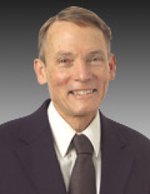
William Happer, Princeton University
“Why
has there been no global warming for the past decade?”
The temperature of the Earth’s surface has not changed by more than
0.1C since the year 2000, and it may even have cooled slightly. Most
computer models predicted that the increase of CO2, from about 370 to
400ppm during that period, should have caused a warming of around 0.3C.
There are many possible reasons for the failure of the models, but one
may be insufficient careful attention to important and often neglected
details of how CO2 molecules really absorb and emit radiation in the
Earth’s atmosphere. Some of the physics in question is related to early
work by Princeton’s Robert Dicke on collisional line narrowing.
This is the Feynman video clip which Prof. Happer played at the end of his lecture:
At noon the same day, Prof. Happer delivered a
less-technical
lecture at the John Locke Foundation, in Raleigh, NC:
Watch this video »
or here
If neither link works, or if only the sound plays, try a different web browser. Opera works well.
Five weeks later, on October 15, 2014, Prof. Happer delievered another lecture, at the George Marshall Instiute. You may view it here:
http://www.youtube.com/watch?v=gMdYmAo08O4
Three months after that, in January, 2015, the Locke Foundation did a follow-up interview with him:
“Friday Interview: The Myth of Carbon Pollution”
Princeton's Happer pokes holes in conventional climate wisdom
Shortly after that, Prof. Happer wrote a short essay for MasterResource.org entitled,
The Costly, False, Futile Climate Crusade.
He also wrote this book chapter,
which has a lot of overlap with his UNC lecture.
He also wrote this paper on the subject:
doi: 10.1142/S0217751X14600033.
There have also been some exceptionally educational discussions on WUWT
about the physics of the so-called (but misnamed) “greenhouse effect.” Here are three of them:
1. Visualizing the “Greenhouse Effect” Emission Spectra,
by Ira Glickstein, PhD / March 10, 2011
2. Refutation of Stable Thermal Equilibrium Lapse Rates,
by Robert G. Brown / January 24, 2012
3. A First Look At SURFRAD,
by Willis Eschenbach / November 25, 2014
Especially illuminating were several comments by Physics Prof. Robert Brown ("rgbatduke"):
rgbatduke November 25, 2014 at 5:39 am
Excerpt:
“On the other side of things (escaping photons) you have the same problem, only
even more complex as pressure broadening means that heat leaks out along the edges of the
lines as they sharpen at lower pressures at higher heights, narrowing the absorption bands
above the emission bands below.”
...and this one:
rgbatduke November 26, 2014 at 9:00 am
If you're hungry for more, this textbook comes highly recomended:
A First Course in Atmospheric Radiation, by G.W. Petty
Learn more about climate change, from these resources:
https://sealevel.info/learnmore.html
The list includes:
• accurate introductory climatology information
• in-depth science from both skeptics & alarmists
• links to balanced debates between experts on both sides
• information about climate change impacts, including positive impacts
• links to several of the best blogs on both sides of the issue
Permalink: https://tinyurl.com/happer2014unc

![[ ]](ppt2_20x22.png)
![[VID]](video_icon_20x22.png)
![[ ]](pdf_20x22.png)
![[ ]](gmail_20x22.png)